
Situation:
Formula 1 generates massive amounts of telemetry and race data, but understanding what actually drives performance — driver skill, team strategy, or track conditions — is a challenge. Stakeholders such as teams, analysts, and fans need clearer insights into how these factors affect lap times and race outcomes.
Task:
The objective was to analyze F1 racing datasets (lap times, pit stops, driver standings, constructor performance, and track attributes) to identify key performance drivers and predict race outcomes.
Action:
- Data Preparation: Cleaned multiple CSV datasets (laps, races, results, pit stops, and drivers) and merged them into a unified schema.
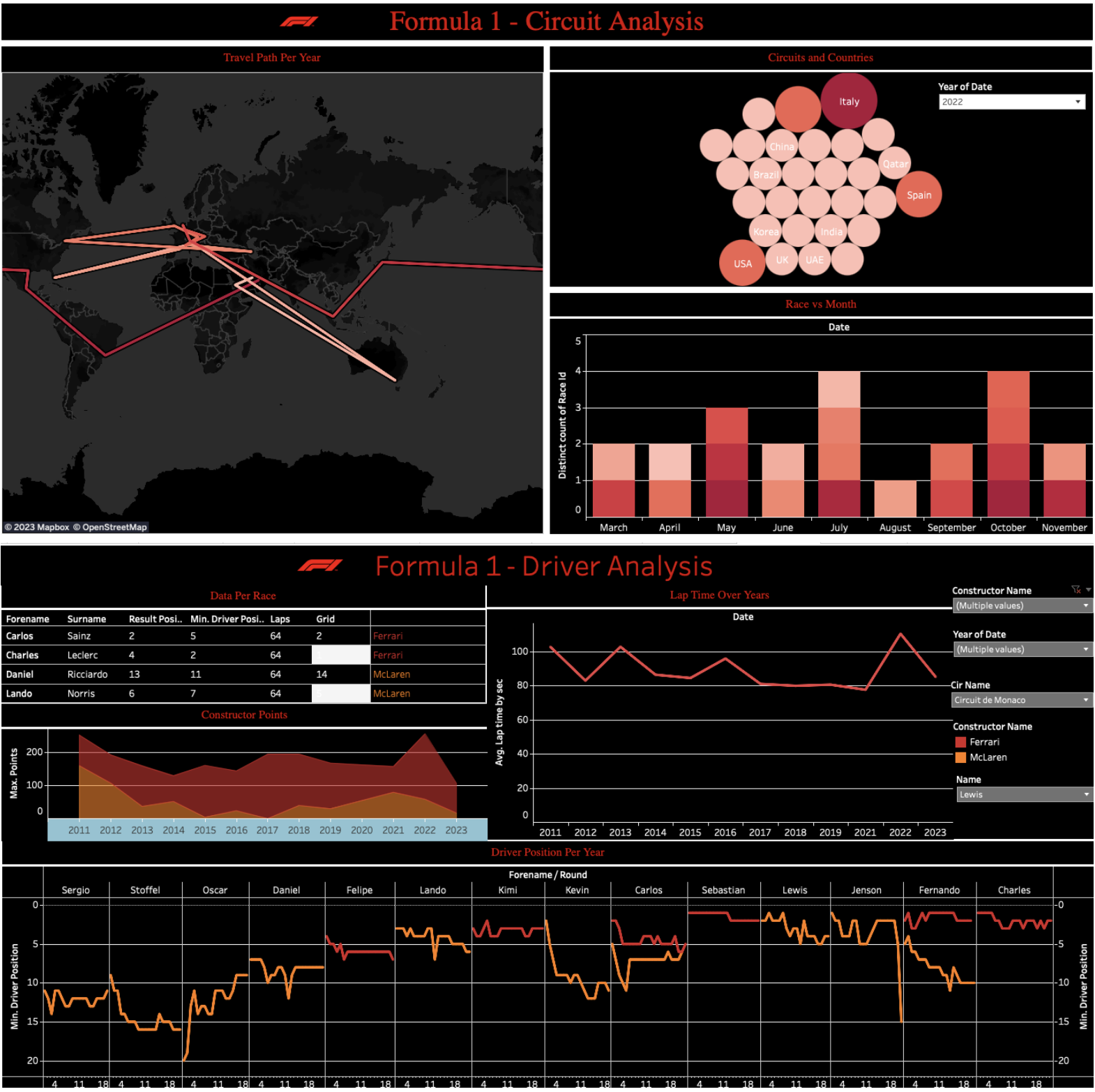
- Exploratory Analysis: Visualized driver vs. constructor contributions, pit stop efficiency, and seasonal performance trends.
- Statistical Modeling:
- Correlated lap times with pit stop counts, weather, and circuit attributes.
- Analyzed constructor dominance and driver performance consistency.
- Compared qualifying performance vs. race results to highlight strategy effects.
- Machine Learning: Experimented with regression models to predict lap times and race finishing positions using combined driver/team/track features.
Result:
- Identified pit stop efficiency and qualifying performance as the two strongest predictors of race success.
- Showed that constructor performance explains a larger variance in race outcomes than individual driver skill, confirming team engineering’s impact.
- Built visual dashboards showing season-long trends in driver vs. team performance, enabling more transparent performance benchmarking.
- Delivered a framework that can be expanded into predictive race simulations for future F1 events.
 Shubham Mishra